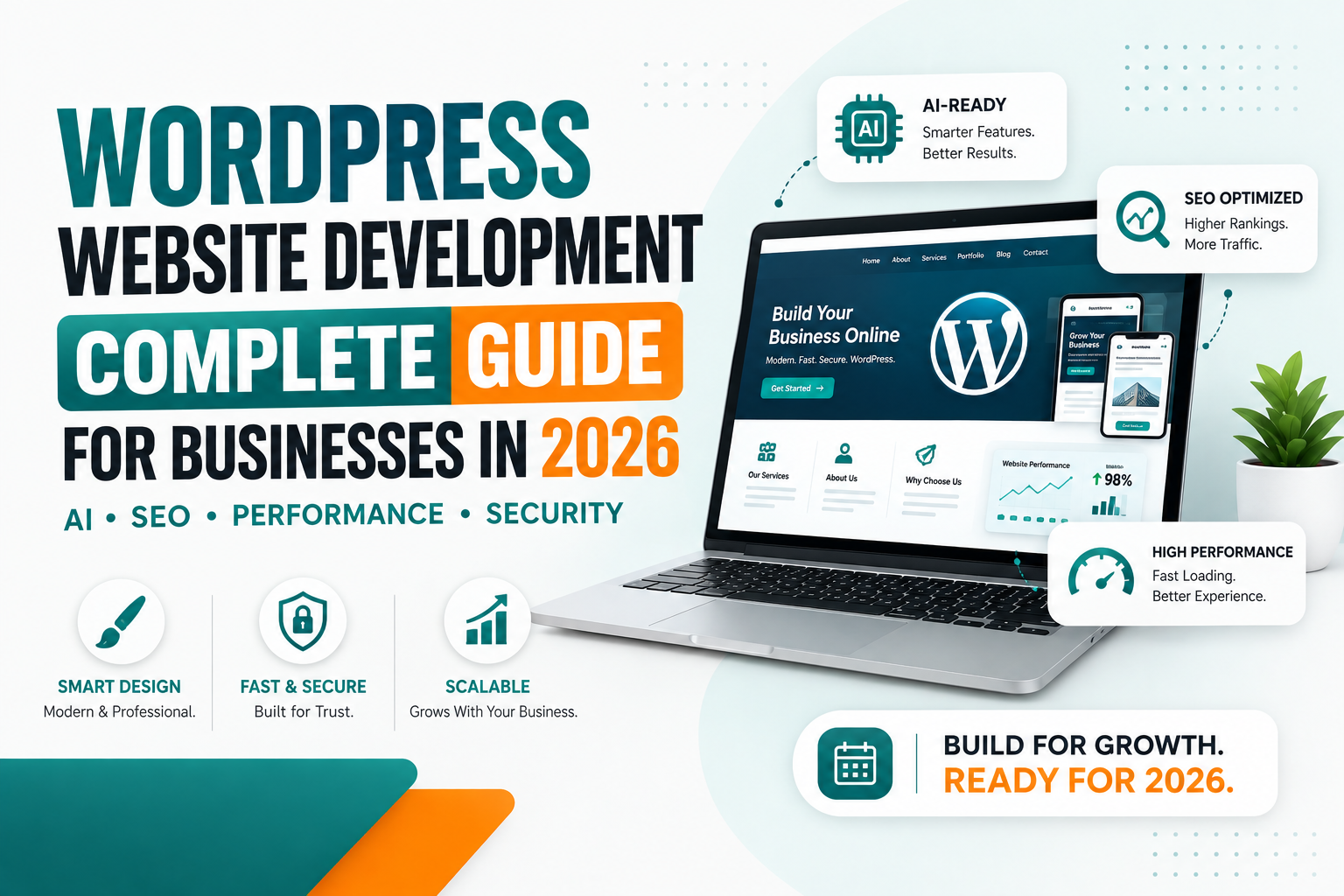
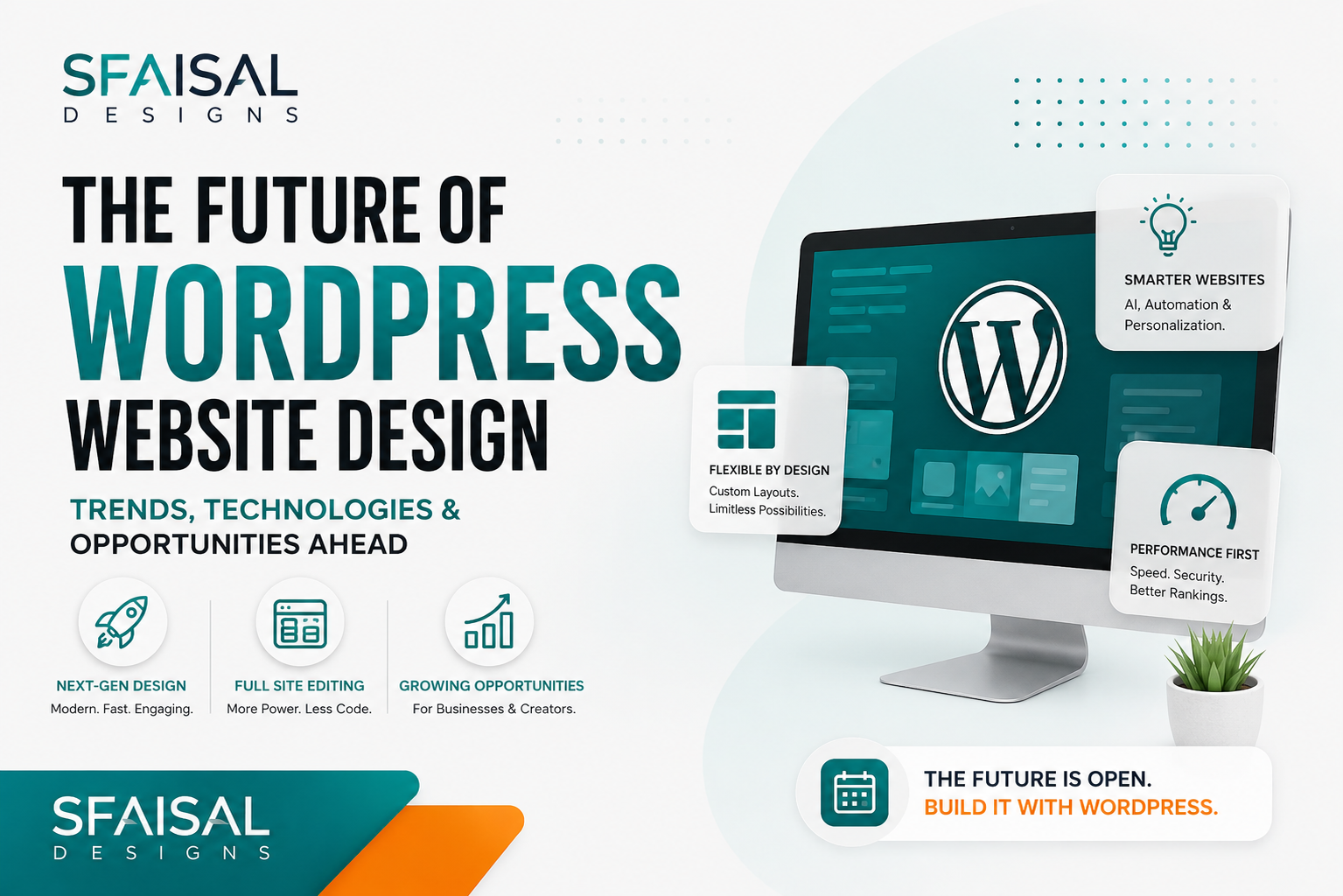
WordPress still powers a huge share of the web, but the platform — and what “good” WordPress design actually means — is changing fast. Businesses evaluating a new website or a redesign in the next few years need to understand where WordPress design is heading, not just where it’s been. Here’s what’s actually shaping the future of WordPress website design, and what it means for your next project.
1. AI-Assisted Design Is Becoming Standard, Not Optional
AI tools are increasingly built directly into the WordPress workflow — generating layout suggestions, writing draft copy, and speeding up content population inside the block editor. This doesn’t replace custom design; it changes what custom design includes. Businesses can expect faster turnaround on first drafts, with human designers focused on refining strategy, brand fit, and conversion structure rather than manually building every block from scratch.
What this means for you: faster project timelines without sacrificing a custom result, as long as your development partner uses AI to accelerate the process rather than replace design judgment entirely.
2. Full Site Editing (FSE) Is Reshaping How Themes Work
WordPress’s Full Site Editing tools continue to mature, giving site owners direct control over headers, footers, and templates without touching code. For agencies, this means custom themes are increasingly built around flexible, block-based systems rather than rigid page-builder plugins — resulting in leaner, faster-loading sites that are still easy for clients to manage themselves.
What this means for you: a custom WordPress site built today should be easier to update yourself tomorrow, not locked behind a specific page builder’s ecosystem.
3. Core Web Vitals And Speed Are Non-Negotiable
Google’s performance signals — load speed, visual stability, interactivity — have moved from “nice to have” to a baseline requirement for ranking well. Bloated page builders and unoptimized plugins are the most common reason WordPress sites fail these benchmarks. The future of WordPress design leans heavily toward lightweight, purpose-built code over stacking plugins to add features.
What this means for you: if your current site feels slow, that’s not just a UX problem — it’s actively working against your SEO.
4. Headless and Hybrid WordPress Setups Are Growing
For businesses with complex needs — high traffic, custom applications, or multi-platform content — “headless” WordPress (using WordPress as a content backend while building a custom frontend) is becoming a realistic option, not just an enterprise-only approach. This isn’t necessary for most small and mid-sized business websites, but it’s an option worth understanding if your site needs to scale significantly.
What this means for you: most businesses don’t need headless WordPress yet, but it’s worth asking your developer whether your growth plans might benefit from it down the line.
5. Accessibility Is Moving From Afterthought To Default
Accessible design — proper contrast, keyboard navigation, screen-reader-friendly structure — is increasingly expected by users, search engines, and in some regions, required by law. WordPress theme development is shifting toward building these standards in from the start rather than retrofitting them later.
What this means for you: a well-built WordPress site today should be accessible by default, not as a separate add-on project.
6. Design Is Getting More Distinctive, Not Less
As AI-generated and template-based sites become more common, businesses that invest in genuinely custom design stand out more, not less. Generic, templated WordPress sites are easy to spot — and increasingly easy for visitors to dismiss. The businesses that win online are the ones whose sites don’t look like everyone else’s.
What this means for you: custom design isn’t a luxury add-on — it’s becoming one of the clearest ways to differentiate from competitors using the same handful of templates.
What This Means For Your Next WordPress Project
The future of WordPress design isn’t about chasing every new feature — it’s about building sites that are fast, genuinely custom, easy to manage, and built on a foundation that won’t need a full rebuild in two years. That’s the standard we build to on every project.
Frequently Asked Questions
Is WordPress still a good choice for a new business website in 2026 and beyond? Yes. WordPress continues to power a significant share of the web, and ongoing improvements to Full Site Editing, performance, and accessibility make it a strong long-term choice for most businesses.
Do I need AI tools built into my website? Not necessarily as a customer-facing feature — but AI-assisted development can mean faster project turnaround and lower costs without sacrificing quality, which benefits any business building a new site.
Will my current WordPress site become outdated? Sites built on bloated page builders or outdated themes are more likely to fall behind on speed and Core Web Vitals. A technical audit can confirm whether your current site needs a rebuild or just optimization.
Should I consider headless WordPress? Only if you have complex, high-scale needs. Most small and mid-sized business websites are better served by a well-built traditional WordPress site.